On this page8
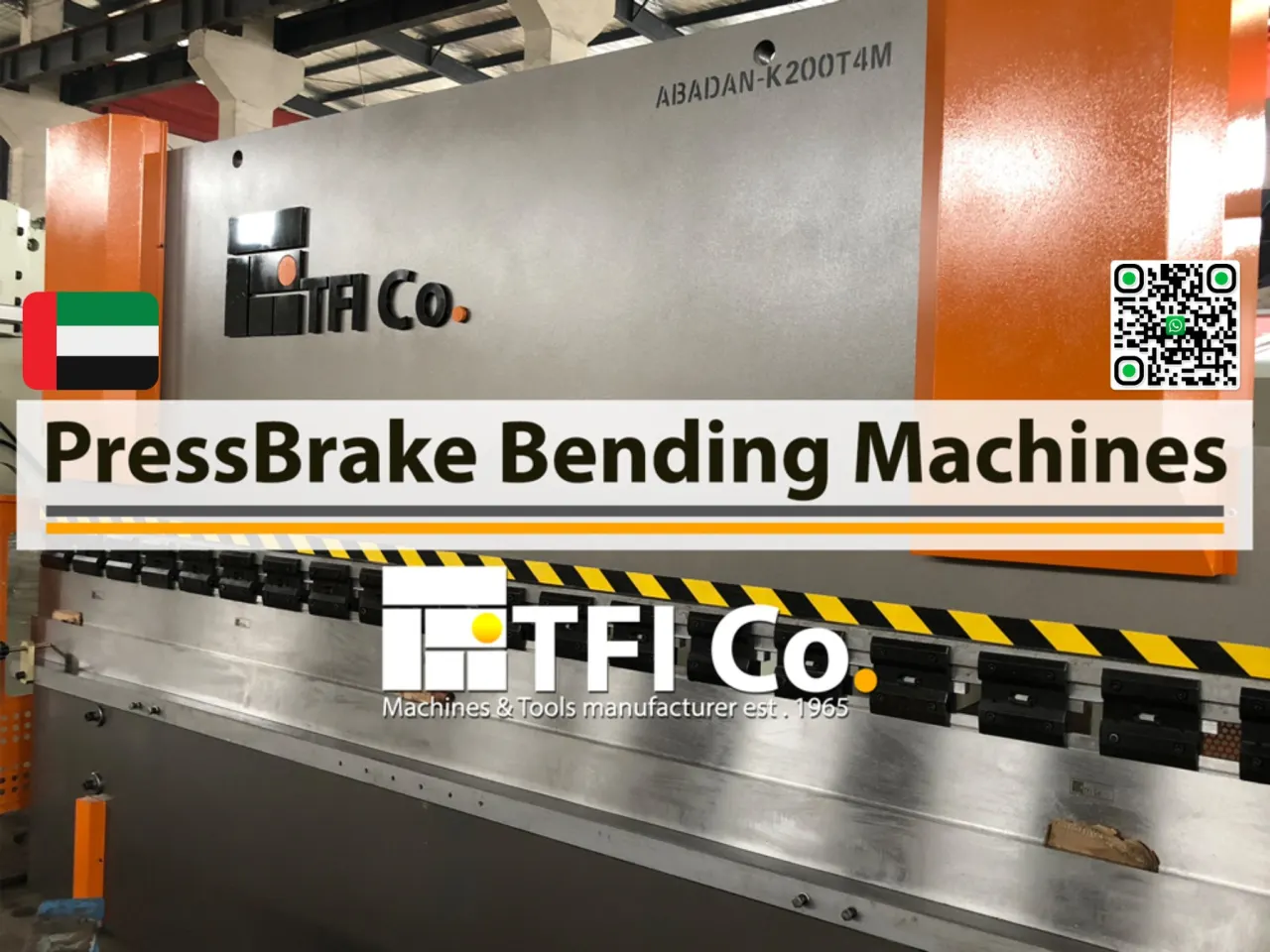
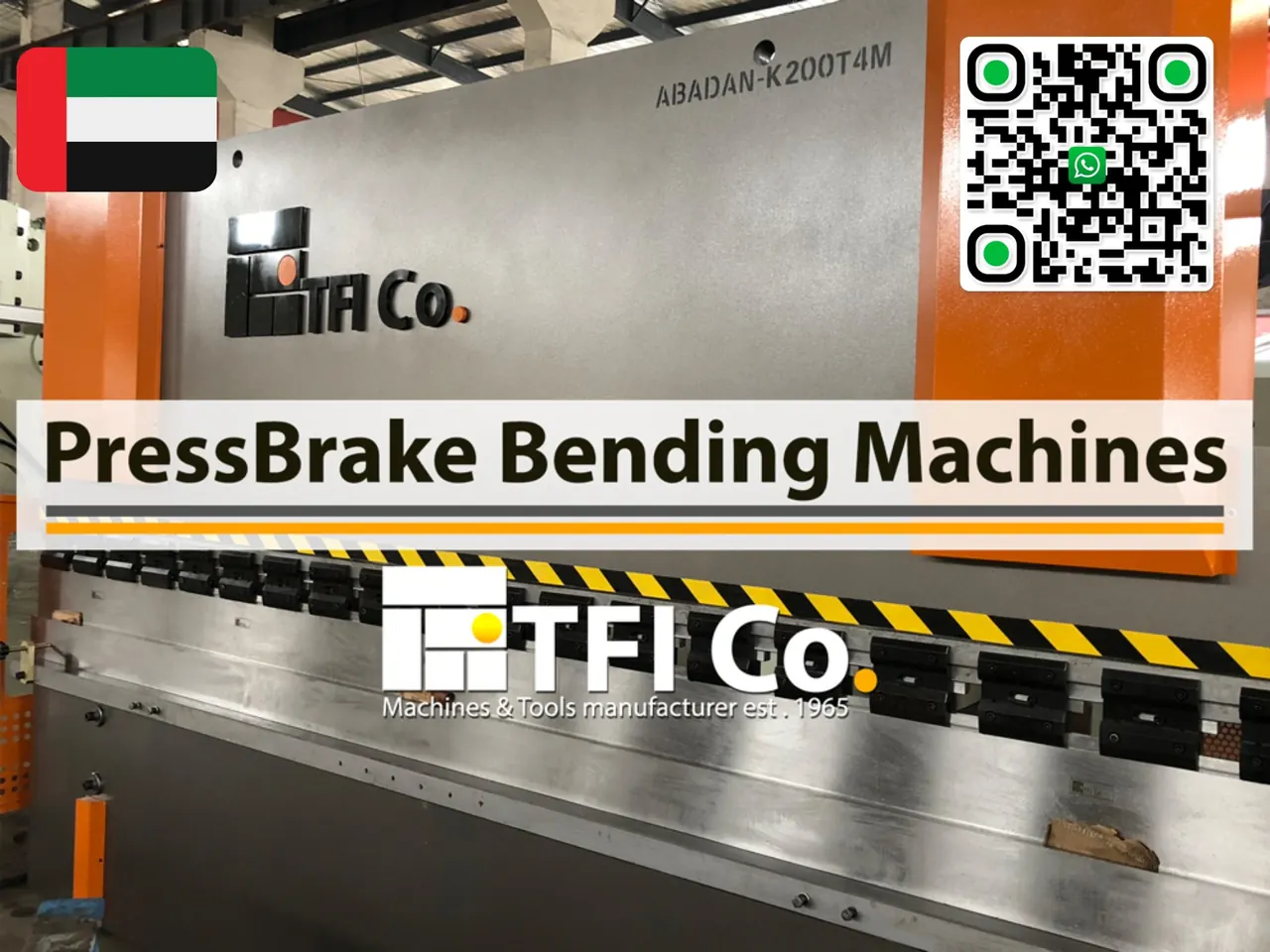
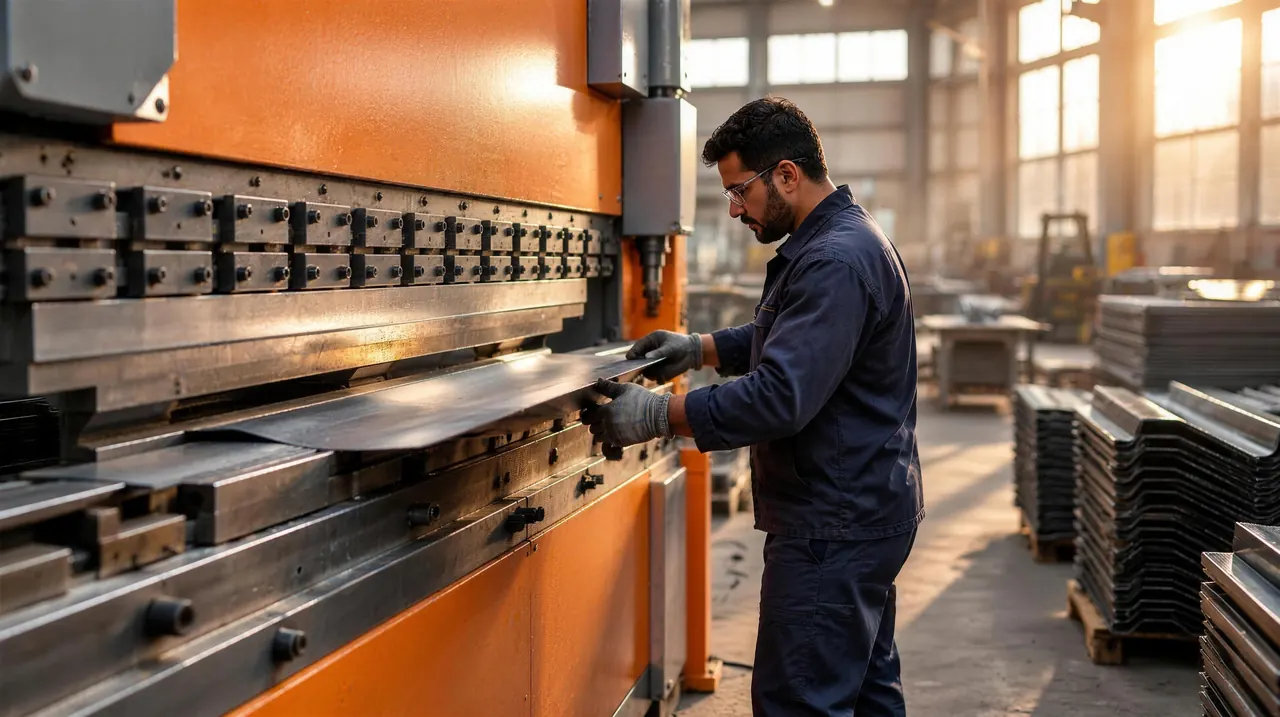
Press brake benefits in one line: a press brake turns flat blanks from the shear or the laser into finished parts, with straight, accurate bends that repeat from the first part to the last. It bends sheet and plate in steel, stainless steel, aluminium, brass and copper, from thin covers to heavy brackets. TFI has built metalworking machines since 1965.
5 benefits of a press brake
Accuracy.
The back gauge places the sheet and the ram depth sets the angle. On a CNC press brake both are programmed, so the bend lands where the drawing puts it.
Repeat parts.
A saved program bends the next batch the same way, months later, with any trained operator.
Range of parts.
With a set of punches and dies one machine makes channels, angles, boxes, brackets and panels in many thicknesses and materials.
Speed per part.
A CNC press brake runs the bend sequence step by step: the back gauge moves by itself between bends, so a part with several bends leaves the machine in one handling.
A safer workplace.
Guards, light curtains and foot pedals with emergency stop keep hands away from the tools.
How much bending force do you need?
For air bending, the usual workshop formula is force (kN) = 650 × thickness² (mm) × length (m) ÷ die opening (mm), for mild steel of about 450 MPa. With the usual die opening of 8 × the thickness, the force per metre of bend is:
Bending force per metre: typical capacities for mild steel
1 mm
- Die opening (V)*
- 8 mm
- Force per metre of bend*
- About 80 kN (8 t)
2 mm
- Die opening (V)*
- 16 mm
- Force per metre of bend*
- About 160 kN (17 t)
3 mm
- Die opening (V)*
- 24 mm
- Force per metre of bend*
- About 245 kN (25 t)
4 mm
- Die opening (V)*
- 32 mm
- Force per metre of bend*
- About 325 kN (33 t)
5 mm
- Die opening (V)*
- 40 mm
- Force per metre of bend*
- About 405 kN (41 t)
6 mm
- Die opening (V)*
- 48 mm
- Force per metre of bend*
- About 490 kN (50 t)
8 mm
- Die opening (V)*
- 64 mm
- Force per metre of bend*
- About 650 kN (66 t)
10 mm
- Die opening (V)*
- 80 mm
- Force per metre of bend*
- About 810 kN (83 t)
12 mm
- Die opening (V)*
- 96 mm
- Force per metre of bend*
- About 975 kN (99 t)
Example: a 3 metre bend in 6 mm mild steel needs about 3 × 50 = 150 tonnes*. Stainless steel needs more force and soft aluminium less; ask TFI to check your parts. Leave a margin above your heaviest bend.
Which TFI press brake fits?
TFI builds press brakes in four tiers. The tier says how much the machine does by itself; the size is the force and the bed length. The Abadan press brake (TFI Bend 5) is TFI's CNC press brake with a servo back gauge.
TFI press brakes by tier
TFI Bend 3
- Build
- Hydraulic, torsion bar
- Control
- NC back gauge and depth
- Force
- 40 to 160 t*
- Bed length
- 2500 or 3200 mm*
TFI Bend 5
- Build
- Hydraulic, torsion bar
- Control
- CNC, servo back gauge (X) and depth (Y)
- Force
- 100 to 200 t*
- Bed length
- 2500 or 3200 mm*
TFI Bend 7
- Build
- Electro-hydraulic, two cylinders (Y1, Y2)
- Control
- CNC, back gauge X and R, crowning
- Force
- 63 to 160 t*
- Bed length
- 1600 to 3200 mm*
TFI Bend 9
- Build
- Servo-electric or hybrid
- Control
- CNC
- Force
- 35 to 100 t*
- Bed length
- 1250 to 3200 mm*
What to plan with your press brake
Tools
the punch and die set for your parts; TFI makes press brake tools.
Bed length
your longest part, plus room to handle it.
Back gauge
how many axes your parts need (X, R, more).
Care
daily cleaning and oil checks; see press brake maintenance in the UAE.
Service
press brake servicing in the UAE by TFI.
TFI press brake on video
A TFI press brake of 200 tonnes and 4000 mm bending sheet, from the TFI Co. YouTube channel.
Frequently asked questions
What does a press brake do?
It bends sheet and plate along a straight line between a punch and a die, to make channels, angles, boxes, brackets and panels.
NC or CNC press brake?
An NC press brake sets the back gauge and depth for one bend at a time. A CNC press brake runs a whole programmed bend sequence and saves it for the next batch.
How many tonnes do I need?
Use the table above: force per metre for your thickness, times the length of your longest bend, plus a margin. Ask TFI to check your parts.
Does TFI make the tools?
Yes. TFI makes punches and dies for press brakes. Send the drawing of your part.
Ask TFI for a quote
Send the material, thickness and length you work with, and ask TFI for the datasheet and a quotation.

Talk to our team
Ask TFI for more. Send the material, thickness and length you work with, chat with us on Telegram or call us, and ask for the datasheet and a quotation.
- Section
- Industrial Machines for UAE
- Updated
- 15 November 2026
- Reading time
- 4 min read
Discuss this with our team
Tell us what you need: call us or chat on Telegram, and our team gets back to you.
Send an enquiry