On this page12
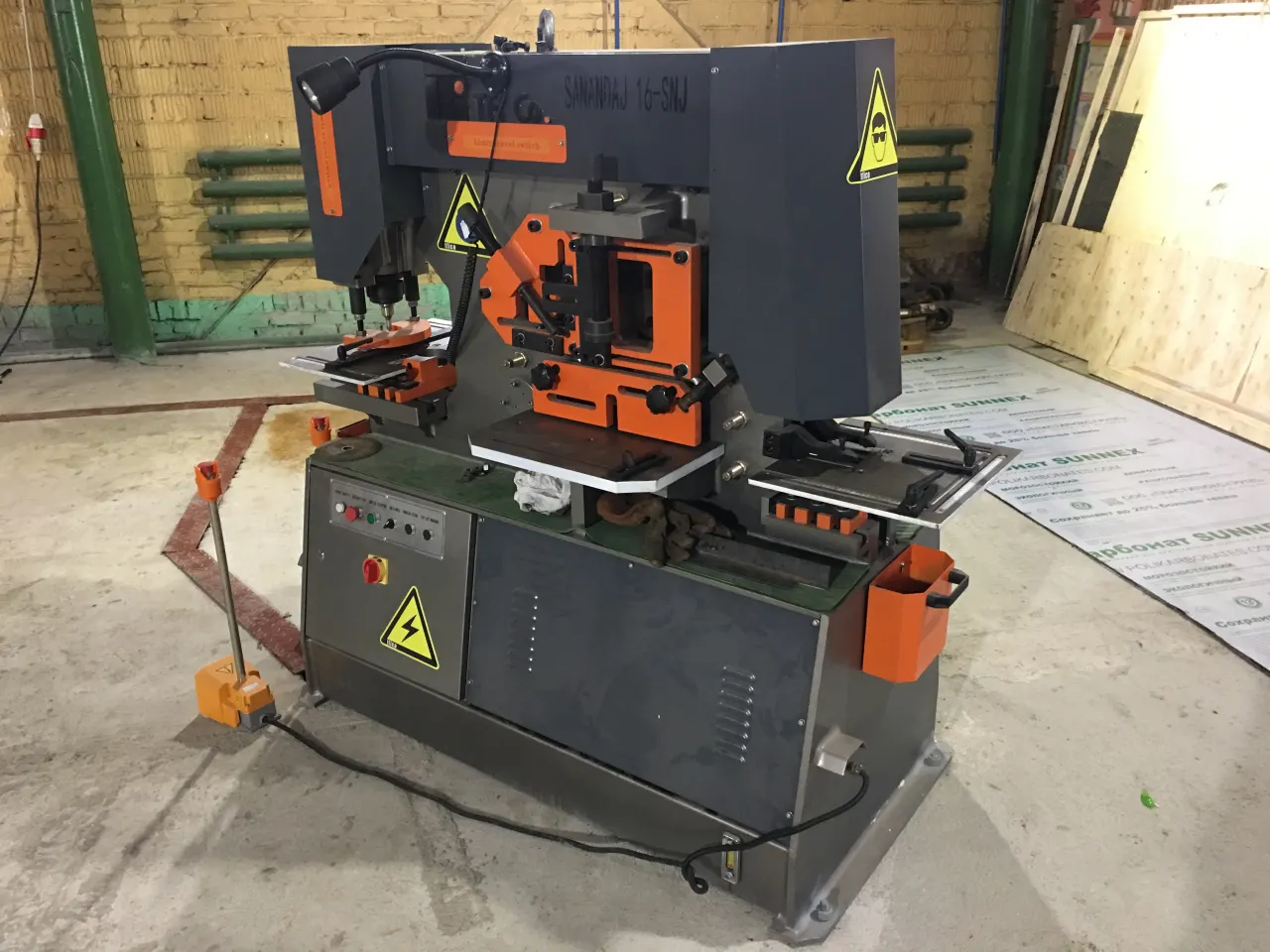
An ironworker is five machines in one frame: it punches holes, shears flat plate, cuts sections such as angles and bars, notches corners and, with a tool, bends short pieces. Steel structures, towers, frames, gates and brackets are made on it. One hydraulic machine replaces a drill, a saw and a small shear in a fabrication shop.
How TFI names its ironworkers
Every TFI machine has one model name built the same way: TFI · family · tier · size. The tier (3, 5, 7 or 9) tells you the class of the machine at a glance; the size is written in real units. A letter at the end (B, C ...) marks a later redesign.
Example: TFI Iron 5 25 is a hydraulic ironworker with one cylinder that shears flat mild steel up to 25 mm thick.
Ironworker tiers
Iron 3
- Drive
- Mechanical
- Operators
- One
- Positioning
- Manual stops
- Best for
- Light work, small shops
Iron 5
- Drive
- Hydraulic, one cylinder
- Operators
- One station at a time
- Positioning
- Manual stops
- Best for
- Most fabrication shops
Iron 7
- Drive
- Hydraulic, two cylinders
- Operators
- Two people at the same time
- Positioning
- Manual stops
- Best for
- Busy shops and steel structure lines
Iron 9
- Drive
- Hydraulic
- Operators
- One or two
- Positioning
- CNC back gauge and positioning
- Best for
- Repeat holes in long parts
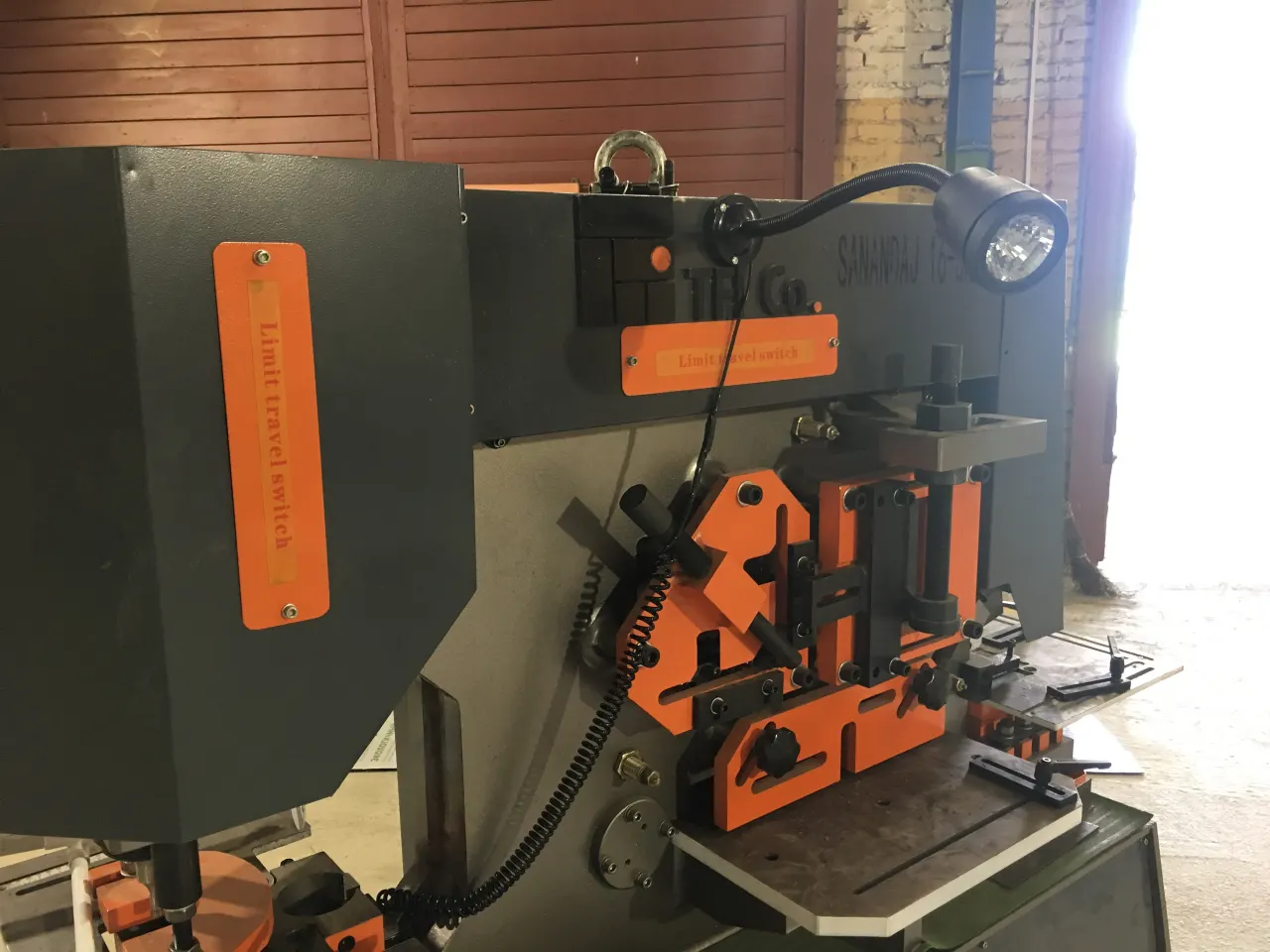
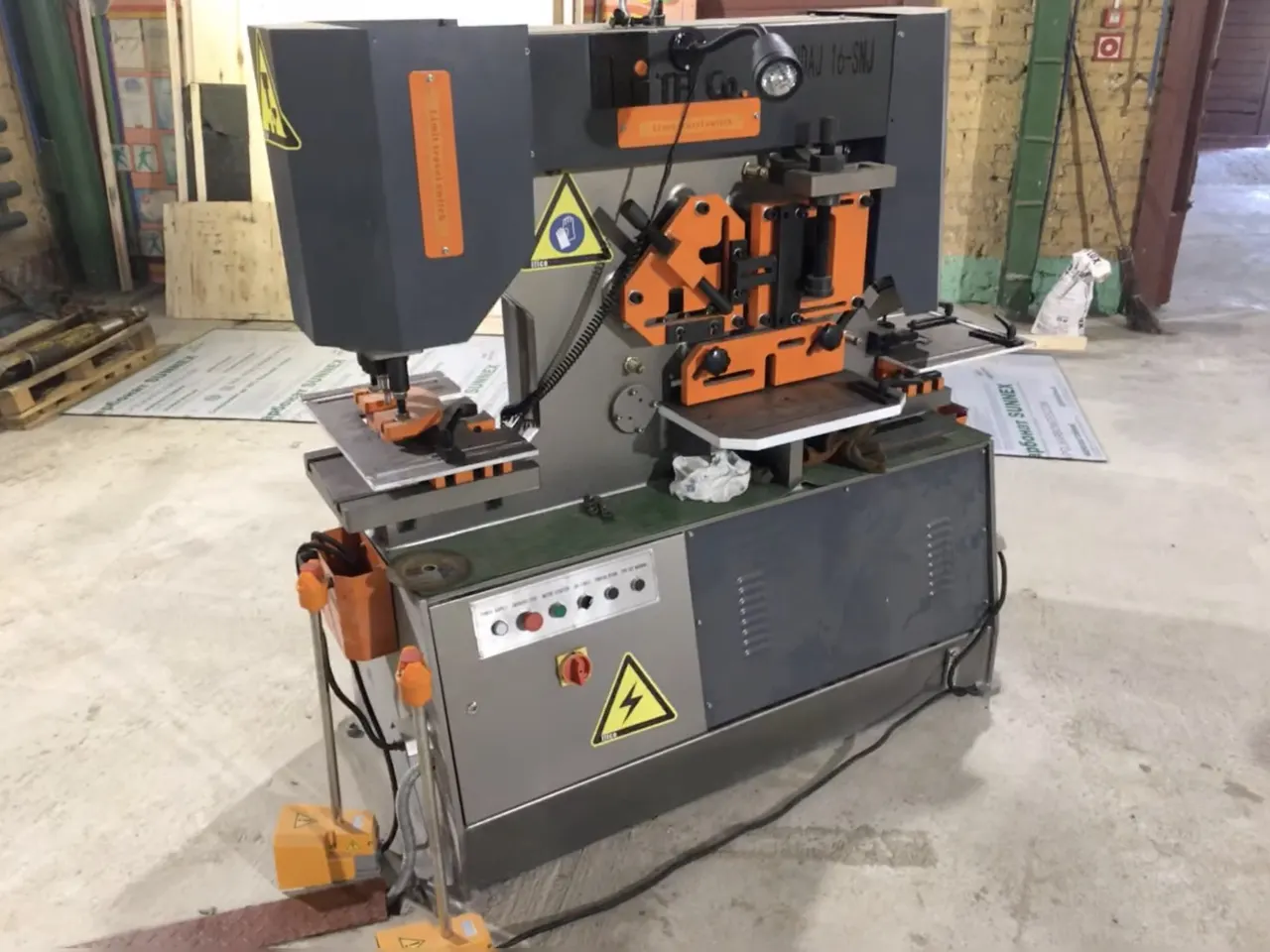
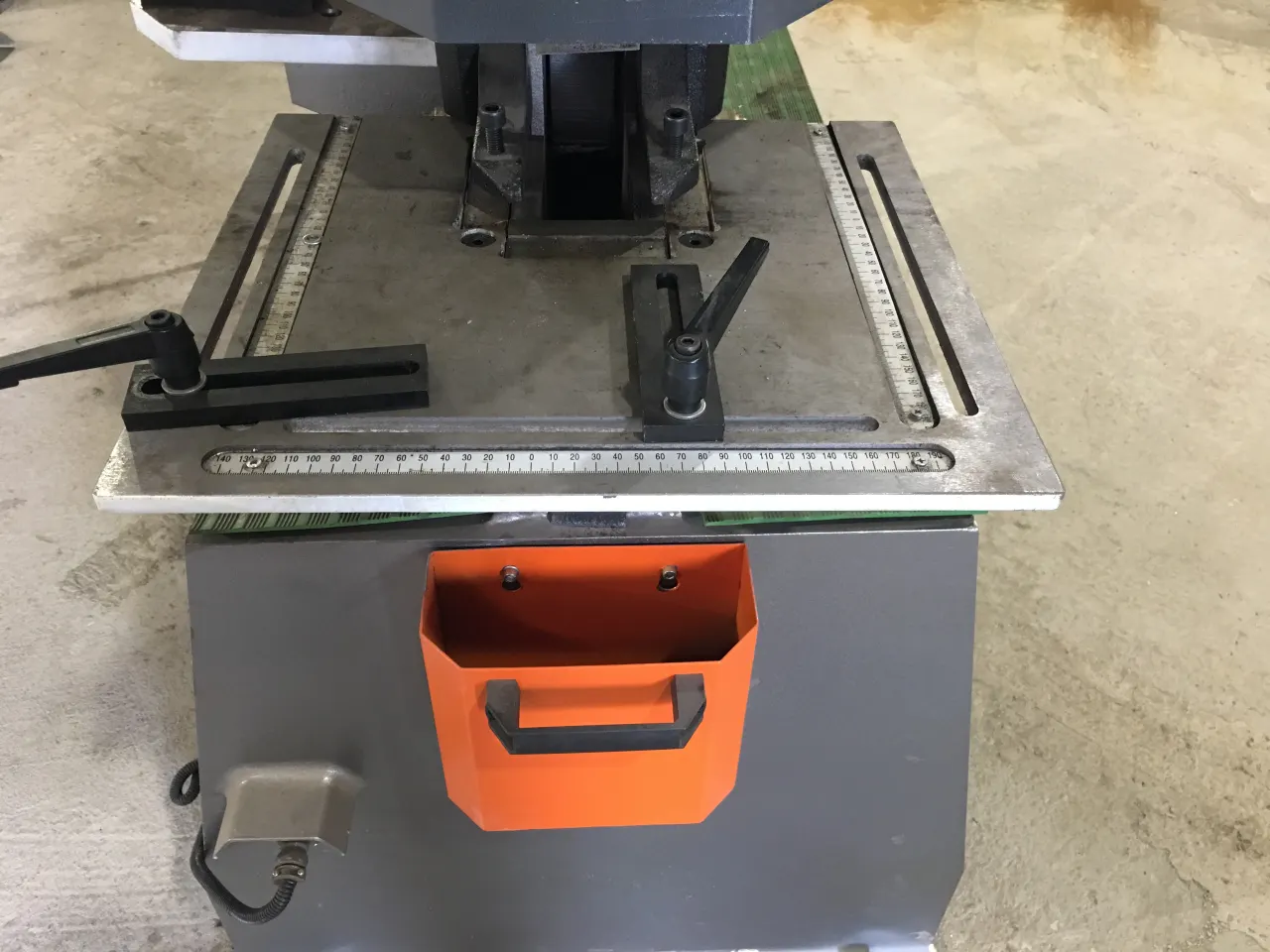
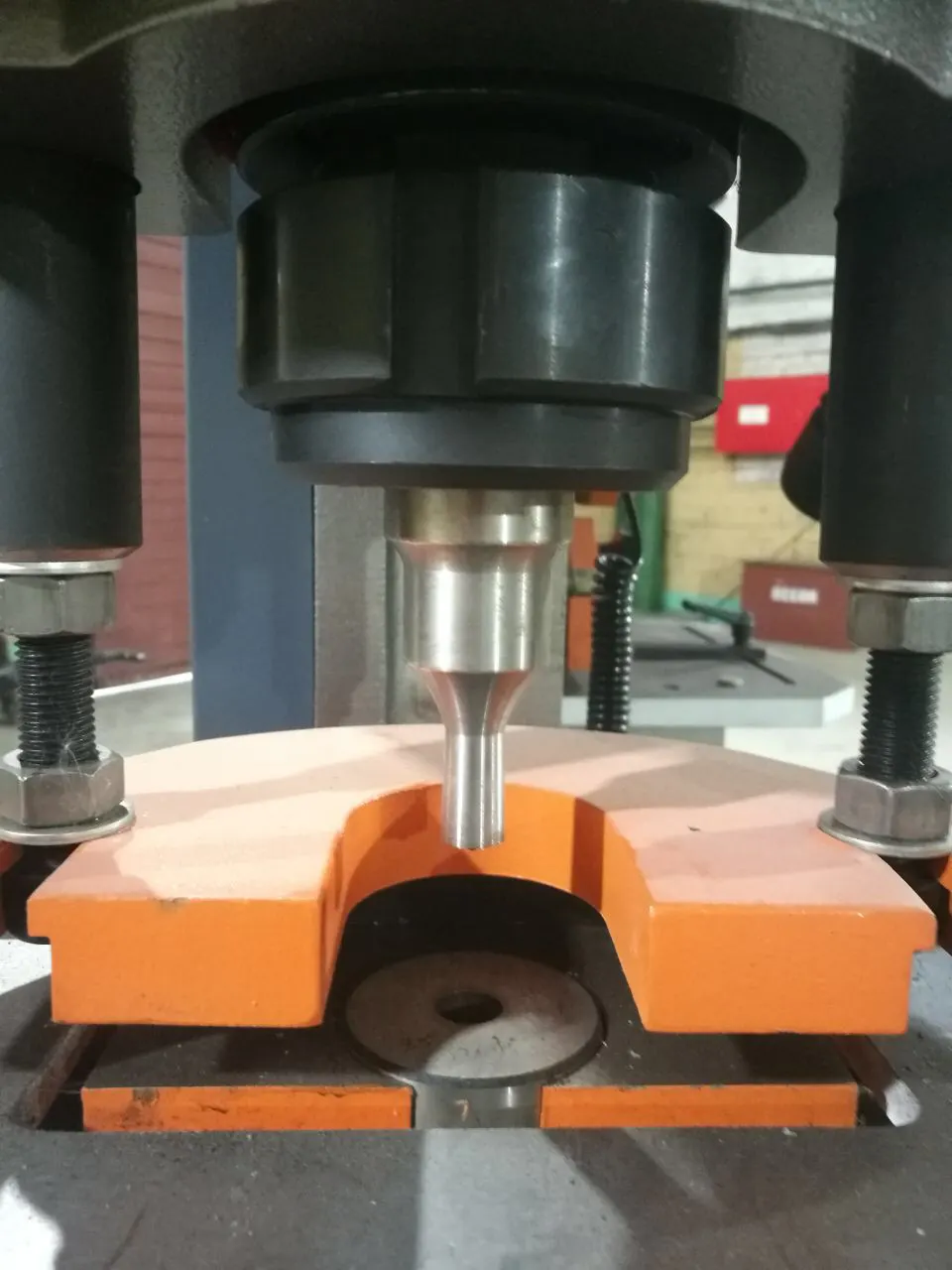
Ironworkers in the TFI workshop
Model sizes
Every TFI model number is built the same way: TFI Iron, the tier (3, 5, 7 or 9), then the size (plate thickness it shears, in mm). Pick a model to see its full characteristics, jobs and sizes.
All TFI Iron models and capacities
5
Tier
- Build
- Hydraulic ironworker, one cylinder
- Punch force*
- 60 t
- Plate shear*
- 16 mm
5
Tier
- Build
- Hydraulic ironworker, one cylinder
- Punch force*
- 90 t
- Plate shear*
- 20 mm
5
Tier
- Build
- Hydraulic ironworker, one cylinder
- Punch force*
- 120 t
- Plate shear*
- 25 mm
5
Tier
- Build
- Hydraulic ironworker, one cylinder
- Punch force*
- 160 t
- Plate shear*
- 30 mm
7
Tier
- Build
- Hydraulic ironworker, two cylinders
- Punch force*
- 90 t
- Plate shear*
- 20 mm
7
Tier
- Build
- Hydraulic ironworker, two cylinders
- Punch force*
- 120 t
- Plate shear*
- 25 mm
7
Tier
- Build
- Hydraulic ironworker, two cylinders
- Punch force*
- 160 t
- Plate shear*
- 30 mm
7
Tier
- Build
- Hydraulic ironworker, two cylinders
- Punch force*
- 200 t
- Plate shear*
- 40 mm
All TFI Iron models and capacities
TFI Iron 5 16Tier5
- Build
- Hydraulic ironworker, one cylinder
- Punch force*
- 60 t
- Plate shear*
- 16 mm
TFI Iron 5 20Tier5
- Build
- Hydraulic ironworker, one cylinder
- Punch force*
- 90 t
- Plate shear*
- 20 mm
TFI Iron 5 25Tier5
- Build
- Hydraulic ironworker, one cylinder
- Punch force*
- 120 t
- Plate shear*
- 25 mm
TFI Iron 5 30Tier5
- Build
- Hydraulic ironworker, one cylinder
- Punch force*
- 160 t
- Plate shear*
- 30 mm
TFI Iron 7 20Tier7
- Build
- Hydraulic ironworker, two cylinders
- Punch force*
- 90 t
- Plate shear*
- 20 mm
TFI Iron 7 25Tier7
- Build
- Hydraulic ironworker, two cylinders
- Punch force*
- 120 t
- Plate shear*
- 25 mm
TFI Iron 7 30Tier7
- Build
- Hydraulic ironworker, two cylinders
- Punch force*
- 160 t
- Plate shear*
- 30 mm
TFI Iron 7 40Tier7
- Build
- Hydraulic ironworker, two cylinders
- Punch force*
- 200 t
- Plate shear*
- 40 mm
Holes it can punch
The largest round hole each size punches, by plate thickness, in mild steel. A hole should not be smaller than the plate is thick, so smaller holes are left out.
Largest punched hole, mild steel
Size 16
- 10 mm plate
- Ø 41 mm
- 12 mm plate
- Ø 34 mm
- 16 mm plate
- Ø 26 mm
- 20 mm plate
- -
- 25 mm plate
- -
Size 20
- 10 mm plate
- Ø 60+ mm
- 12 mm plate
- Ø 52 mm
- 16 mm plate
- Ø 39 mm
- 20 mm plate
- Ø 31 mm
- 25 mm plate
- -
Size 25
- 10 mm plate
- Ø 60+ mm
- 12 mm plate
- Ø 60+ mm
- 16 mm plate
- Ø 52 mm
- 20 mm plate
- Ø 41 mm
- 25 mm plate
- Ø 33 mm
Size 30
- 10 mm plate
- Ø 60+ mm
- 12 mm plate
- Ø 60+ mm
- 16 mm plate
- Ø 60+ mm
- 20 mm plate
- Ø 55 mm
- 25 mm plate
- Ø 44 mm
Size 40
- 10 mm plate
- Ø 60+ mm
- 12 mm plate
- Ø 60+ mm
- 16 mm plate
- Ø 60+ mm
- 20 mm plate
- Ø 60+ mm
- 25 mm plate
- Ø 55 mm
The five stations
Stations
Punch
- What it does
- Round, square and oval holes; with special tools, shapes
- Typical work
- Bolt holes in plates, angles and channels
Plate shear
- What it does
- Cuts flat bar and plate straight or at an angle
- Typical work
- Base plates, gussets, strips
Section shear
- What it does
- Cuts angles, round bar and square bar without burrs
- Typical work
- Frames, railings, gates
Notcher
- What it does
- Cuts corners out of angles and plates
- Typical work
- Corners of frames before welding
Bending (option)
- What it does
- Bends short pieces of flat bar
- Typical work
- Brackets and clips
How to choose
Holes
the biggest hole in the thickest plate you punch decides the size; check the holes table.
Sections
the largest angle and bar you cut; ask for the section table of the size you like.
Tier
5 for most shops, 7 when two people work at the same time, 9 for repeat hole patterns in long parts.
Holes
the biggest hole in the thickest plate you punch decides the size; check the holes table.
Sections
the largest angle and bar you cut; ask for the section table of the size you like.
Tier
5 for most shops, 7 when two people work at the same time, 9 for repeat hole patterns in long parts.
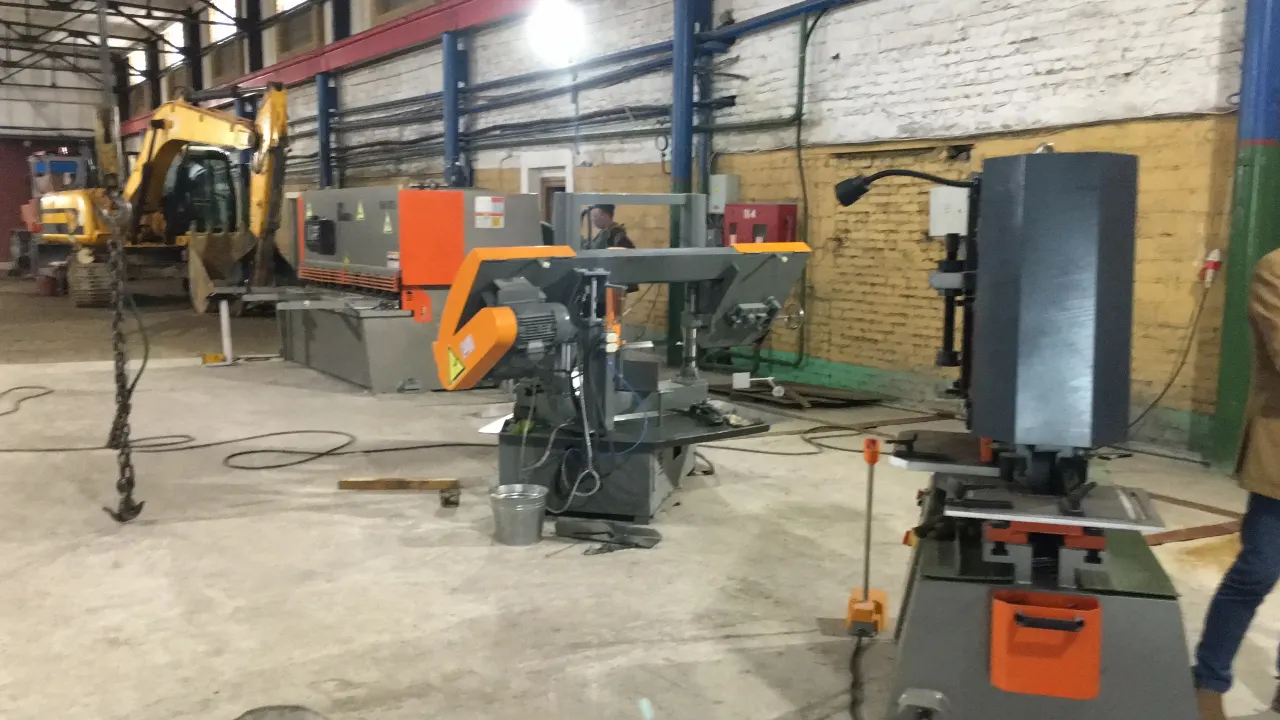
TFI ironworkers and service
TFI ironworker on video
A TFI hydraulic ironworker with its punching, shearing and notching stations, from the TFI Co. YouTube channel.
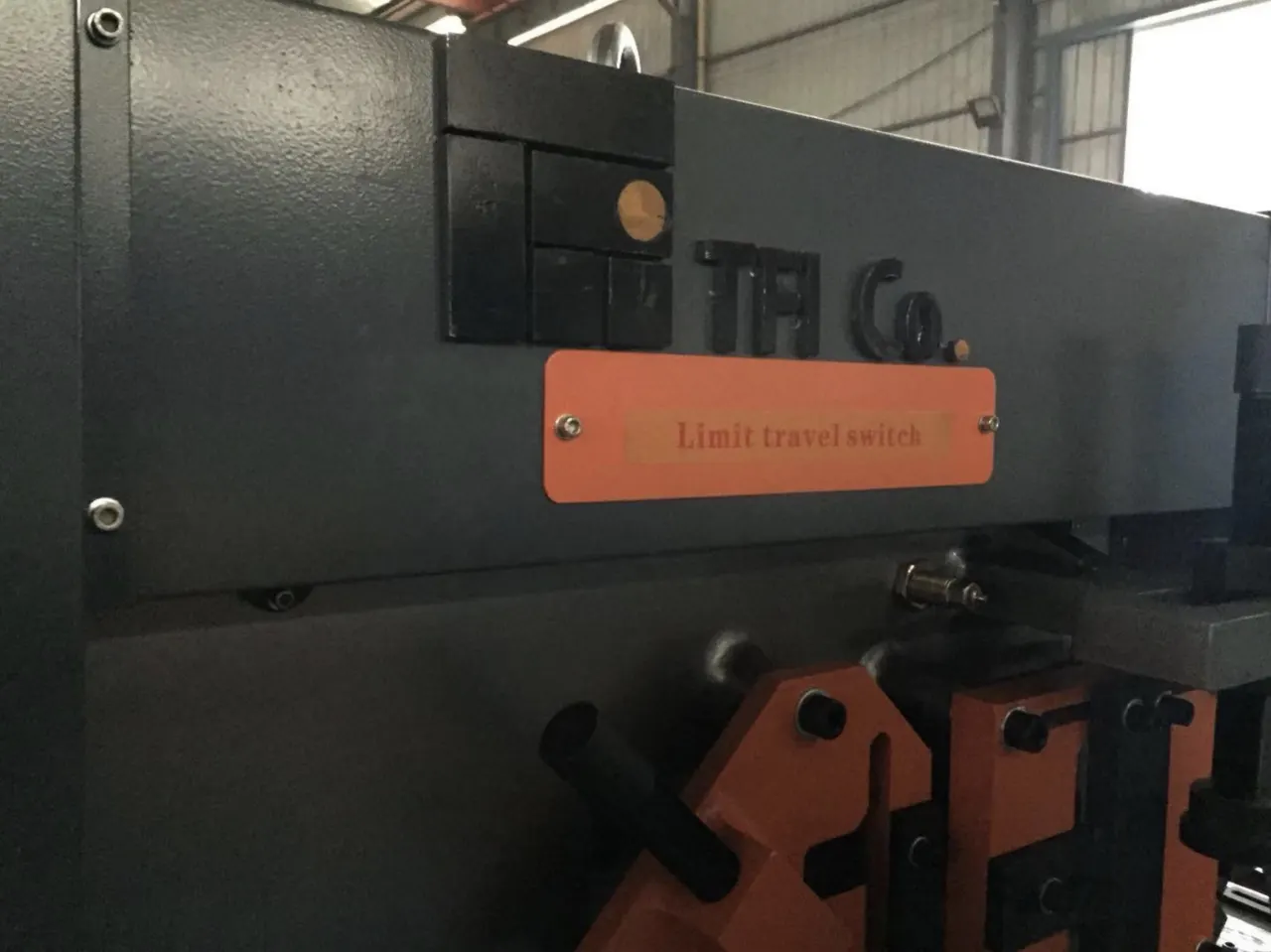
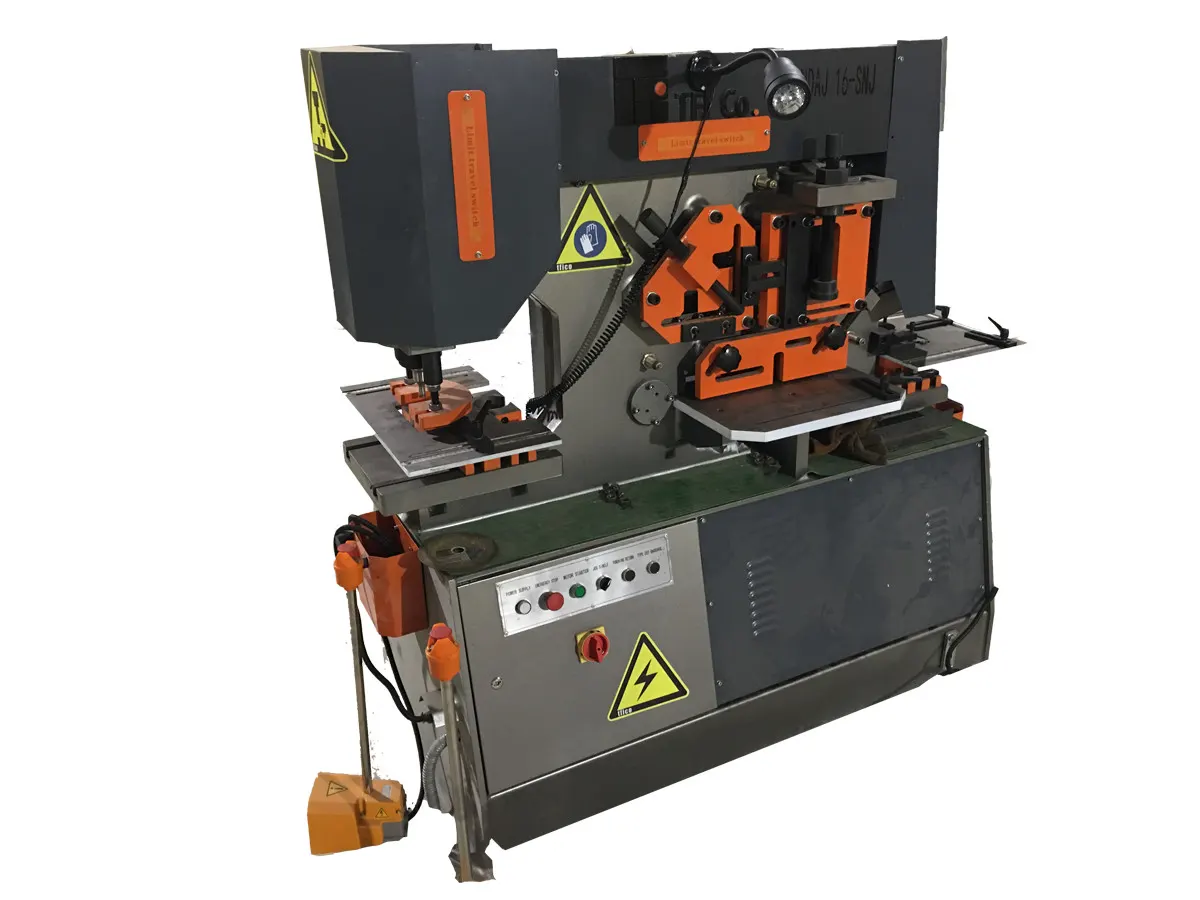
More ironworkers from TFI
Frequently asked questions
What does TFI Iron 5 25 mean?
A hydraulic ironworker with one cylinder (tier 5) that shears flat mild steel up to 25 mm thick.
Can two people work at the same time?
Yes, on tier 7: it has two cylinders, so one person can punch while another shears.
Can it punch stainless steel?
Yes. Count on about 70 % of the hole size in mild steel at the same thickness.
Ask TFI for a quote
Send the material, thickness and length you work with, and ask TFI for the datasheet and a quotation.

Talk to TFI about your fabrication work
Ask TFI for more. Send the material, thickness and length you work with, chat with us on Telegram or call us, and ask for the datasheet and a quotation.
- Reading time
- 4 min read
Discuss this with our team
Tell us what you need: call us or chat on Telegram, and our team gets back to you.
Send an enquiry